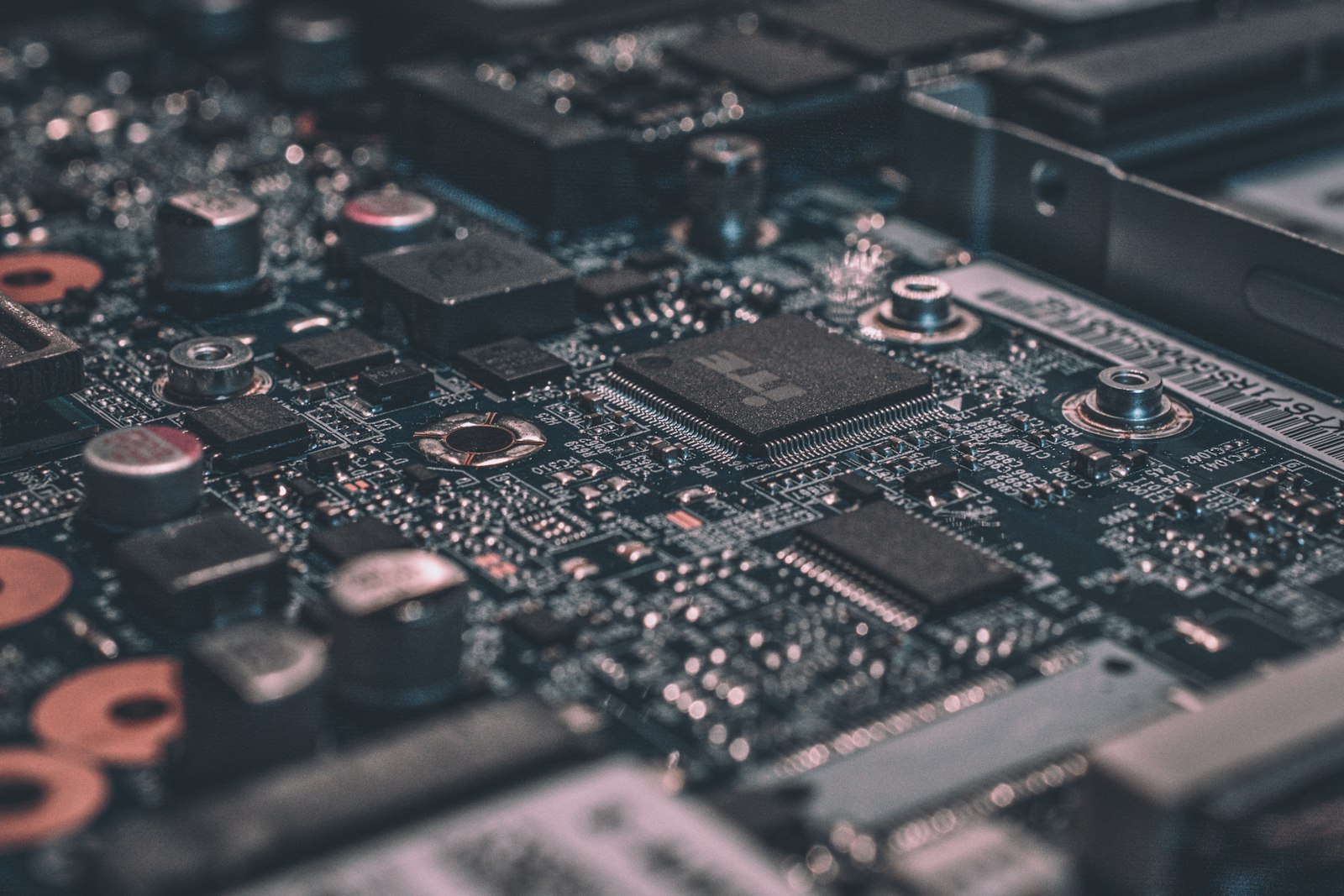
For the past few years, building with language models has meant one thing by default: send the request to someone else's datacenter and wait for the answer. The models were too big to run anywhere else, so the cloud became the unquestioned home of AI, and everything we built inherited its assumptions. But a quiet counter-movement has been gathering momentum. Small language models have become startlingly capable, consumer hardware has sprouted neural accelerators, and a growing class of agentic workloads turns out to fit comfortably on the machine in your pocket or on your desk. This is a practical guide to on-device agents: when local inference genuinely makes sense, what the hardware and runtimes can actually deliver, and how to architect systems that keep private data where it belongs.
The pendulum swings back
Computing has always oscillated between centralization and the edge. Mainframes gave way to personal computers, which gave way to the cloud, which is now, in some corners, giving way again to capable local devices. The AI wave initially looked like the ultimate argument for centralization, because frontier models require clusters of accelerators no individual could own, and for the largest models that remains true. But the assumption that every model call must travel to a datacenter deserves more scrutiny than it usually gets. A remarkable amount of what agents actually do on a given turn, classifying an intent, extracting fields from a document, deciding which tool to call, summarizing a page, rewriting a sentence, does not need a frontier model at all. It needs a competent small model with the right context, and competent small models now run on phones.
The shift matters for agents specifically, more than for chat. A chat interface makes one call per user message, and a few hundred milliseconds of network latency disappears into the rhythm of conversation. An agent loop makes many calls per task, often dozens, and pays the network tax on every one of them. The economics and the latency mathematics of agents are exactly what make local inference interesting, because the loop multiplies every per-call cost, and a cost that rounds to zero locally compounds very differently from one that does not.
What counts as on-device
The phrase covers more territory than it first appears to. At one end sits the phone in your hand, running a three-billion-parameter model on a neural engine while the radio sleeps. Next comes the laptop, where sixteen or thirty-two gigabytes of unified memory will hold a seven- or fourteen-billion-parameter model at usable speed. Beyond that is the workstation with a consumer GPU, comfortably serving models in the thirty-billion range, and then the edge server, a box in a shop, a factory, a hospital wing, that serves a building rather than a user. What unites them is not the form factor but the property that inference happens on hardware you or your organization physically control, without the request leaving for a third-party API.
That definition puts the emphasis where it belongs: on ownership and locality of data rather than on miniaturization for its own sake. An on-premises server running an open-weights model is, for most architectural purposes, on-device in the sense this post cares about. The design questions it raises, what fits in memory, what latency is achievable, what happens when the model is not good enough, are the same ones the phone raises, just with more generous numbers.
Four arguments for local
The case for on-device inference rests on four pillars, and it is worth being precise about them because they apply with very different force to different applications.
Latency is the most visceral. A round trip to a cloud API costs somewhere between one hundred milliseconds and several seconds depending on the model, the region, and the weather in the provider's queue. Local inference on a small model can begin producing tokens in tens of milliseconds. For a single call the difference is nice; for an agent loop of twenty calls it is the difference between a tool that feels instant and one you start conversations with and then go do something else. Voice interfaces feel the difference most acutely, since anything beyond about half a second of silence reads as the system not working.
Privacy is the pillar with legal teeth. Data that never leaves the device never crosses a compliance boundary, never appears in a provider's logs, never becomes subject to another company's retention policy, and never travels through a jurisdiction your lawyers worry about. For healthcare, legal, financial, and government workloads this is frequently not a preference but a requirement, and local inference converts an intractable data-governance negotiation into a non-event. The same holds for personal context: an agent that reads your messages, files, and screen can be genuinely useful precisely because that data is too sensitive to ship wholesale to an API.
Cost inverts the usual pricing model. Cloud inference is a marginal cost that scales with usage forever; local inference is a capital cost the user has already paid, sitting idle in their pocket. For high-frequency, low-stakes calls, the classifier that runs on every keystroke, the summarizer that runs on every page, per-token pricing is punishing, while the local NPU does the same work for the cost of a little battery. Products with millions of users notice that ninety percent of their inference bill is calls a small local model could have handled.
Offline operation is the pillar everyone forgets until they are on a plane. Field work, factory floors, vehicles, rural clinics, disaster response, and ordinary travel all involve environments where connectivity is absent or unreliable, and an agent that dies without a signal is not dependable in the way its users need. Local models keep working in the basement, and dependability of that kind compounds into trust.
An agent loop multiplies every per-call cost by the number of turns. That multiplication is exactly what makes local inference interesting.

Small models grew up
None of this would matter if small models were still toys, and until fairly recently they were. The change over the past two years is qualitative, not just quantitative. Models in the one-to-fourteen-billion-parameter range, trained on dramatically better data mixtures and distilled from far larger teachers, now handle instruction following, structured output, tool calling, and multi-step reasoning at a level that would have required a frontier model not long ago. The gap between small and large models has not closed, but it has moved: it now lives in long-horizon reasoning, obscure knowledge, and adversarial robustness, not in the bread-and-butter operations that dominate an agent's turn-by-turn workload.
The mechanism behind this is worth understanding because it tells you where small models will and will not be strong. Most capable small models are distillations: a large teacher model generates or filters training data, and the small student learns to imitate the teacher's behavior on that distribution. The student inherits the teacher's polish on tasks well represented in the distillation data, structured extraction, summarization, routine tool selection, and remains weakest exactly where imitation is hardest, on novel multi-step problems far from the training distribution. A small model is therefore best understood not as a uniformly weaker large model but as a specialist in the common case, and agent architectures that route the common case locally are playing directly to that strength.
What quantization actually buys you
The single most important enabling technique for on-device inference is quantization: storing model weights at lower numeric precision than they were trained in. A model trained in sixteen-bit floating point can, with care, be stored and executed at four bits per weight with only a modest quality penalty, which cuts its memory footprint by roughly four times. Memory, not compute, is the binding constraint on consumer hardware, both because the whole model must fit in RAM and because generation speed is largely governed by how fast weights can be streamed through the memory bus. Quantization attacks both problems at once, which is why a technique that sounds like an implementation detail is in fact the difference between a model that runs on a laptop and one that does not.
The costs are real but manageable. Aggressive quantization degrades quality unevenly, and the degradation concentrates in exactly the places agents care about: precise formatting, reliable tool-call syntax, and edge-case reasoning. A model that benchmarks nearly identically at four bits may fail noticeably more often at producing a well-formed function call with correctly typed arguments. The practical discipline is to evaluate the quantized artifact you will actually ship, on your task, rather than trusting quality numbers reported for the full-precision original. Quantization-aware evaluation is not optional, because the model you deploy is not the model on the leaderboard.
The hardware underneath
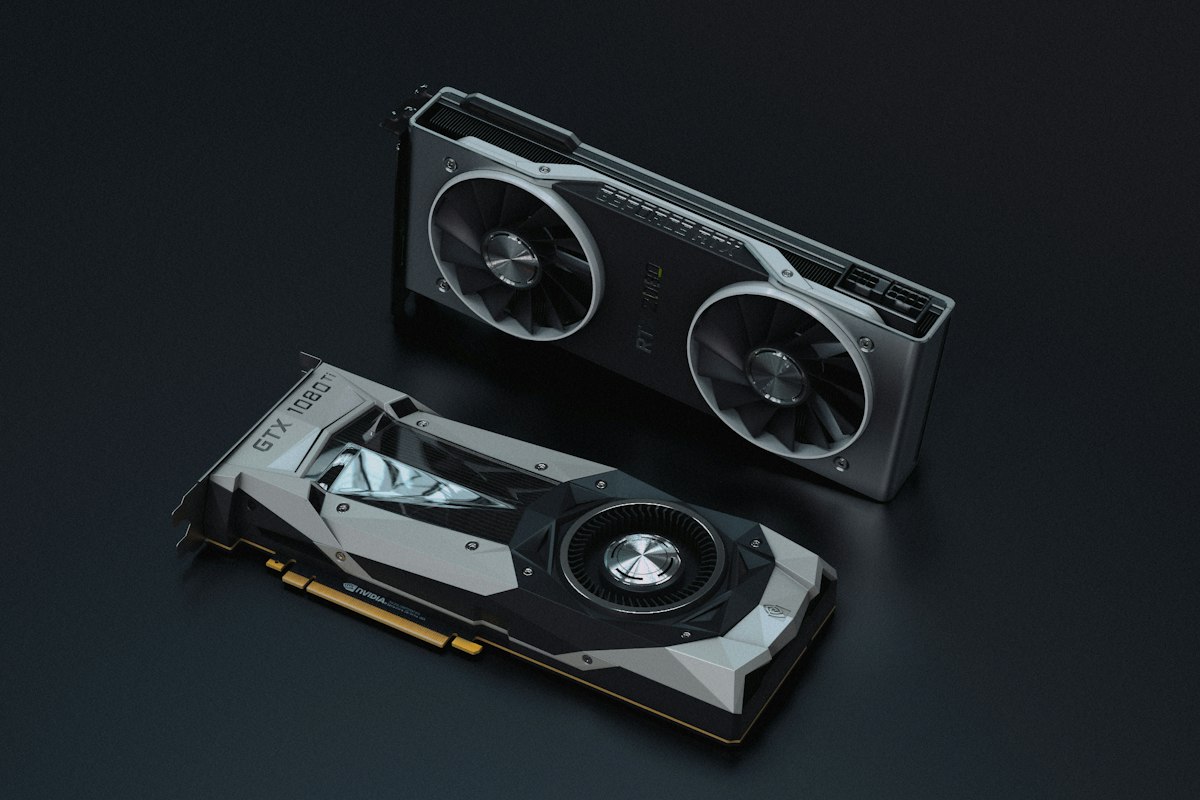
The reason all of this became practical is that consumer hardware quietly turned into AI hardware. Three developments matter. First, neural processing units are now standard: every current flagship phone and an increasing share of laptops ship with a dedicated accelerator that executes matrix operations at a fraction of the power the CPU would draw, which matters enormously on a battery. Second, unified memory architectures, in which CPU and GPU share one large pool of fast memory, dissolved the awkward ceiling that discrete-GPU VRAM used to impose; a laptop with sixty-four gigabytes of unified memory can hold models that would embarrass a desktop graphics card. Third, memory bandwidth on high-end consumer silicon has grown to the point where interactive token generation rates, twenty to a hundred tokens per second for mid-size models, are routine.
The numbers translate into rules of thumb worth carrying. A modern phone comfortably runs models up to around three or four billion parameters quantized. A mainstream laptop handles seven to fourteen billion. A well-provisioned workstation or an edge box with a consumer GPU reaches into the thirty-to-seventy-billion range. These figures shift yearly in the model's favor, both because hardware improves and because model quality per parameter improves faster still. The planning implication is that whatever marginal capability forces you to the cloud today is a candidate to come home to the device within a hardware generation or two.
The runtime landscape
Between the model weights and the silicon sits a runtime, and the ecosystem has matured from hobbyist scripts into dependable infrastructure. The workhorse of the space is the family of llama.cpp-derived runtimes, which execute quantized models efficiently across CPUs, GPUs, and mixed configurations, and which underpin many of the friendly desktop applications that made local models accessible in the first place. Apple's MLX targets unified memory on Apple silicon with impressive generation speeds. ONNX-based stacks and vendor toolchains map models onto phone NPUs. In the browser, WebGPU-based runtimes now execute genuinely useful models inside a web page with no installation at all, which is a distribution story worth taking seriously: the least frictional deployment of a local model is a URL.
Choosing among runtimes is mostly a question of matching your target hardware and integration surface rather than chasing benchmarks. What deserves more attention than raw tokens per second is operational behavior: how the runtime handles memory pressure when the user opens a game mid-task, whether it supports constrained decoding so tool calls can be schema-enforced at generation time, how quickly a model loads from cold, and whether context can be cached across turns so the agent is not re-processing its entire history on every iteration of the loop. These operational details, not peak throughput, determine whether the agent built on top feels dependable.
Can a small model run an agent loop?
This is the question that decides whether on-device agents are a real category or a demo, and the honest answer is: yes, within a design envelope, and the envelope is wider than most people assume but narrower than enthusiasts claim. The agent loop places specific demands on a model. It must follow instructions reliably across many turns, produce structured output that parses, choose sensibly among tools, and recognize when it is done. On each of these, small models are usable but brittle in characteristic ways. They follow instructions well until the context grows cluttered, at which point they lose the thread faster than large models do. They produce clean structured output when the schema is simple, and degrade as schemas nest. They select tools well from a menu of five and poorly from a menu of forty. They are noticeably worse at knowing when they are wrong.
Every one of those weaknesses can be engineered around, and the engineering looks like good agent hygiene taken seriously rather than exotic technique. Keep the tool menu small and the descriptions crisp. Enforce output schemas with constrained decoding rather than hoping. Keep contexts short and aggressively pruned. Break tasks into narrow steps with explicit success criteria rather than handing the model an open-ended objective. Validate every action in deterministic code before executing it. None of this is novel advice, but it changes from best practice to survival requirement as the model shrinks. A useful way to say it: large models forgive sloppy agent design, small models do not, and the discipline the small model forces on you usually improves the system at every scale.
Large models forgive sloppy agent design. Small models do not — and the discipline they force on you improves the system at every scale.
Designing the loop for a small brain
Beyond hygiene, on-device agents reward a handful of specific architectural moves. The first is decomposition: rather than one general loop with many tools, build several narrow loops with few tools each, and route between them with a cheap classifier. A three-billion-parameter model asked to be a universal assistant will disappoint; the same model asked only to triage notifications, or only to extract structured data from receipts, or only to draft replies in your style, can be excellent, because each narrow loop lives inside the distribution where small models are strong.
The second move is to lean harder on deterministic scaffolding. Where a cloud agent might ask the model to plan, an on-device agent does better with plans expressed as explicit state machines in code, using the model only for the steps that genuinely require language understanding. The third is to exploit the one resource local inference makes free: retries and drafts. When tokens cost nothing marginal, you can sample three candidate tool calls and take the majority, or generate a draft locally and have a verifier check it, patterns that would be wasteful at API prices but are nearly free on an NPU that would otherwise sit idle. Local inference does not just change where the model runs; it changes which agent designs are economically sensible.
The hybrid architecture: local first, cloud when it counts
The most productive framing for on-device agents is not local versus cloud but local first, cloud when it counts. In a hybrid architecture, the device is the default execution environment: the local model handles routing, extraction, summarization, drafting, and the mechanical turns of the loop, and the system escalates to a cloud model only when a step demonstrably exceeds local capability. Done well, the cloud call becomes the exception rather than the rule, which is precisely the inversion that makes the economics and the privacy story work. The cloud model becomes a consultant you bring in for the hard parts, not a landlord you pay on every transaction.
The interesting engineering problem is the escalation decision itself: how does the system know a step is beyond the local model? Several signals compose. Task type is the crudest and most reliable, some step categories are simply designated cloud-only by policy. Confidence signals from the local model, log probabilities, self-assessment prompts, agreement across sampled candidates, are noisier but catch case-by-case difficulty. Failure-driven escalation, in which the local model attempts the step and the system escalates when validation fails or progress stalls, is the most economical because it only pays for the cloud when the local attempt actually failed. Mature hybrids use all three, tuned against logged outcomes, and treat the escalation rate as a first-class metric: rising escalation means the local model is under-provisioned for the workload, and near-zero escalation with quality complaints means the confidence thresholds are lying.
One pattern deserves special mention because it fits agents so naturally: draft locally, verify remotely. The local model produces the complete work product, a reply, an extraction, a plan, and a cloud model is asked only to check and correct it. Verification is usually a shorter, cheaper call than generation, the sensitive raw context can often be omitted or minimized in the verification request, and the latency of the cloud call is hidden behind work the user already sees progressing. It is the rare pattern that improves cost, privacy, and perceived speed simultaneously.
Drawing the privacy boundary
Hybrid architectures sharpen rather than dissolve the privacy question, because now some data does leave the device and the design must say exactly what. The strong position is to treat the device as a privacy boundary in the formal sense: raw personal context, message bodies, file contents, screen captures, health records, never crosses it. What crosses, when escalation happens, is derived and minimized: an abstracted task description, a redacted summary, structured fields with identifying values masked. The local model, usefully, is itself the redaction engine, rewriting the escalation payload to preserve task-relevant structure while stripping identity, an arrangement in which the small model acts as gatekeeper for the large one.
This design needs to be honest to be worth anything. If the abstracted payload still lets the cloud reconstruct the sensitive fact, the boundary is theater, and adversarial testing of the redaction layer belongs in the evaluation suite alongside task quality. It is also worth writing the boundary down as policy, which data classes may never leave, which may leave redacted, which may leave freely, because an implicit boundary erodes one convenient exception at a time. The compliance payoff of a real boundary is substantial: entire categories of regulatory exposure simply do not arise for data that provably never left the hardware.

Memory and context on a budget
Context is expensive everywhere, but on-device it is expensive in a new way: every token of context consumes RAM for its cached attention state and every token must be processed at speeds the memory bus dictates, on hardware that is also running the user's actual life. On-device agents therefore treat context as the scarcest resource in the system. The practical toolkit is familiar but applied with more force: pin the goal and the last few observations verbatim, summarize everything older, keep tool descriptions terse, and prefer retrieval over accumulation, storing history in a local database and pulling back only what the current turn needs. Local vector and keyword search over the user's own data runs beautifully on-device, embeddings are cheap small-model work, and a retrieval-first memory design is both faster and more private than a long-context design.
Persistent memory is where on-device agents hold an advantage cloud agents struggle to match. Because everything stays local, the agent can safely maintain a rich, longitudinal model of the user, preferences, vocabulary, habits, ongoing projects, the kind of profile that would be a liability to accumulate server-side. The device is the natural home for the agent's long-term memory even in architectures where some reasoning happens remotely, and products that understand this end up with a moat made of accumulated local context that no competitor can request via API.
Tools that live where the user lives
An agent is its tools, and the device offers a tool surface the cloud cannot see: the file system, the calendar, the message store, the camera roll, the clipboard, the sensors, the screen itself. On-device agents get to act on this surface directly, with OS-mediated permissions, and without any of it transiting a server. This is where the category stops being a cheaper way to run the same agents and becomes a way to build agents that could not otherwise exist, because no sane user would stream their entire screen and file system to a third party, but many will let a local process see both.
The same proximity raises the stakes of action safety. A local agent with file-system and messaging access can do real damage quickly, and the absence of a server in the loop removes a natural choke point for centralized policy enforcement. The guardrails have to ship with the agent: deterministic validation before every consequential action, OS permission prompts treated as a floor rather than a sufficient defense, dry-run and undo as default behaviors for mutating operations, and human confirmation for anything irreversible. The design intuition is that the device grants the agent hands, and hands need reflexes that operate below the level of the model's judgment.
Fine-tuning small models for narrow jobs
Small models close much of their capability gap when they stop being generalists, and fine-tuning is how you specialize them. The economics that make fine-tuning marginal for frontier models invert at the small end: adapting a three-billion-parameter model with parameter-efficient methods is a modest job on rented hardware, cheap enough to repeat as the task drifts, and the resulting adapter weights are small enough to ship in an app update. For a well-scoped agent role, the intent classifier, the receipt extractor, the reply drafter tuned to a product's tone, a fine-tuned small model routinely beats a prompted model several times its size, while running faster and fitting in less memory.
The playbook mirrors what works at larger scales. Collect real traces of the task, ideally from a period where a larger model performed the role in production; distill, by having the large model generate or correct training examples; tune the small model on that distribution; and evaluate the quantized artifact on held-out real cases before shipping. The failure mode to respect is distribution narrowness: a model tuned hard for one job forgets its general competence, so hybrid designs keep a general model, local or remote, behind the specialist for the inputs that fall outside the tuned distribution. Specialization plus a fallback is the sturdy pattern; specialization alone is a cliff edge.

Evaluating an agent you cannot watch
Cloud agents run where their builders can observe every trace. On-device agents run on hardware you do not control, against data you must not see, which makes evaluation and monitoring genuinely harder and worth deliberate design. Before shipping, the burden falls on device-realistic testing: the exact quantized weights, the actual runtime, representative hardware including the weakest devices you support, and thermally throttled conditions, because the model that passed evaluation on a workstation is not the model your user runs on a warm phone with twelve other apps open. Build a benchmark from your real task distribution and run it per release on a device farm, treating tokens per second, memory high-water mark, and battery draw as first-class results alongside task success.
After shipping, observability has to respect the privacy boundary that justified the architecture in the first place. The workable pattern is local logging with consented, aggregated telemetry: the device keeps detailed traces the user can inspect and share voluntarily with a bug report, while the product phones home only privacy-preserving aggregates, task success rates, escalation rates, validation-failure counts, latency distributions, never content. It is less visibility than server-side builders enjoy, and the discipline it imposes is healthy: you are forced to define crisp, measurable proxies for quality up front rather than trawling raw logs after the fact.
Batteries, thermals, and the physics of UX
On-device agents run inside a physical budget that cloud agents never think about. Sustained inference heats the silicon; heated silicon throttles; throttled silicon slows the agent mid-task, and the user watches responsiveness decay in real time. Battery is the other wall: an agent loop that pins the NPU for minutes will show up in the operating system's energy report with your product's name on it, and users forgive almost nothing that visibly drains their phone. The consequence is that energy and thermal behavior are user-experience features, to be designed and measured, not discovered in reviews.
The mitigations are mostly scheduling. Batch background work and run it while the device charges; that is what overnight is for. Prefer the NPU to the CPU for sustained workloads, since its efficiency advantage is the difference between warm and hot. Cap sustained duty cycles and yield instantly to foreground demand, because the agent is a guest on hardware whose primary job is being the user's computer. And degrade gracefully under thermal pressure, switching to a smaller model or deferring noncritical steps, rather than grinding visibly to a halt. An agent that is polite about resources is an agent that is allowed to stay installed, and retention, not benchmark supremacy, is what an on-device product actually needs.
Local does not mean safe
It is tempting to hear on-device and relax, and parts of the threat model do genuinely improve: no provider retention, no interception of prompts in transit to a third party, no cross-tenant exposure in someone else's infrastructure. But new surfaces open. The model weights, any fine-tuned adapters, and above all the agent's accumulated memory now sit on a lose-able, steal-able object, and must be encrypted at rest with the platform's hardware-backed keys. Prompt injection survives fully intact, because the local agent still reads untrusted email, web pages, and documents, and a hijacked agent with local hands is arguably more dangerous than a hijacked chatbot, which argues for the same instruction-data separation and action validation any serious agent needs, regardless of where inference runs.
There is also a subtler shift: the security perimeter moves from the provider's operations team to the user's device hygiene, and the population of devices is heterogeneous in ways a datacenter never is. Some fraction of your fleet is jailbroken, out of date, or already compromised, and the agent's design should assume its own runtime environment is only as trustworthy as the median phone. Sensible consequences include keeping the most dangerous capabilities behind server-side checks even in a local-first design, signing and verifying model and adapter files like any other executable artifact, and treating the local trace store, which now contains a diary of everything the agent saw and did, as the sensitive database it is.
Local inference removes the provider from your threat model and adds the physical world to it. The agent's diary now lives on an object that can be left in a taxi.
When not to go local
The strongest version of this argument knows its limits, and several classes of work should stay in the cloud without apology. Frontier-grade reasoning is the obvious one: long-horizon planning, difficult synthesis, high-stakes analysis where the quality delta between a small and a large model translates into real consequences. Workloads that need enormous context, whole codebases, discovery-scale document sets, exceed what device memory will hold regardless of cleverness. Tasks that are intrinsically server-side, acting on shared organizational systems, coordinating across many users, consuming data that lives in cloud applications anyway, gain nothing from a local detour. And products still searching for fit usually iterate faster against an API, where a model swap is a config change rather than an app-store release; premature localization is a real failure mode, optimizing distribution before knowing whether anyone wants what is being distributed.
The mirror-image mistake deserves equal billing: reflexively defaulting to the cloud because it is familiar, and paying permanent taxes in latency, cost, and privacy exposure for calls a local model would have handled invisibly. The honest posture is portfolio thinking. An agent is many model calls with wildly different requirements, and the mature architecture sorts them: local by default, cloud where capability demands it, with the boundary revisited every time the hardware and the small models improve, which is to say constantly.
Where this is heading
The trend lines all point the same direction. Every new generation of consumer silicon ships a larger NPU and more memory bandwidth, because AI workloads now sell hardware. Small-model quality per parameter keeps climbing as distillation pipelines industrialize, and the operating systems themselves increasingly ship system models with public APIs, which will make some categories of app-level model shipping unnecessary while making local-first architecture the platform default rather than the contrarian choice. Meanwhile the tooling gap, evaluation harnesses, fleet observability, adapter distribution, constrained decoding as a standard runtime feature, is closing the way developer-tool gaps always close: unevenly, then suddenly.
A reasonable projection is not that on-device replaces the cloud, but that the equilibrium settles where the economics and the physics say it should: the overwhelming majority of model calls, the small, frequent, personal, latency-sensitive ones, execute where the user is, while a shrinking minority of genuinely hard calls travel to hardware that will always be bigger than anything in a pocket. Agents will span the boundary as a matter of course, and the architectural skill of drawing that boundary well, capability-honest, privacy-real, and revisited often, will quietly become one of the defining competencies of building with AI.
A build order that works
For teams convinced enough to try, sequencing matters, and a sensible build order keeps risk low while the learning compounds. Start by instrumenting the agent you already have: log every model call with its task type, context size, latency, and outcome, because that log is the map of what can move local. The distribution is almost always lopsided, with a handful of call types accounting for most volume, and those high-frequency, low-difficulty calls are the beachhead. Second, take the single best candidate, usually routing, classification, or extraction, and stand it up locally behind a feature flag, with the cloud path kept as instant fallback; measure quality head-to-head on real traffic before trusting it. Third, add failure-driven escalation so the local path can be wrong safely, then widen the local surface one call type at a time as confidence and tooling mature.
Only after the mechanical turns are local is it worth reaching for the more ambitious moves: fine-tuned specialists for the highest-volume roles, local retrieval over user data as the memory substrate, and the draft-locally-verify-remotely pattern for user-visible work products. At each stage the decision discipline is the same: move a call local when the measured quality is at parity for that call, not when the aggregate benchmark says the model is good, and keep the escalation hatch open forever, because workloads drift. Teams that follow this order report the same surprise: the fraction of calls that turn out to need the cloud is far smaller than anyone guessed at the start, and the product gets faster in ways users mention unprompted.
The anti-pattern to avoid is the big-bang rewrite, porting an entire cloud agent to a phone in one release. It couples every risk in this post, model quality, thermal behavior, evaluation blindness, distribution, into a single launch, and when something degrades there is no way to tell which layer is at fault. Incremental localization, one measured call type at a time, is slower to demo and dramatically faster to ship.
The bottom line
On-device agents stopped being a curiosity the moment small models learned to follow instructions and consumer silicon learned to run them. The case for them is concrete: latency an agent loop multiplies, costs that vanish into hardware the user already owns, privacy that becomes a boundary instead of a promise, and dependability that survives a lost signal. The limits are equally concrete: a capability envelope that demands disciplined, decomposed, validated agent design, a physical budget of heat and battery, and evaluation that must work without watching. The architecture that reconciles them is hybrid, local first, cloud when it counts, with the escalation boundary treated as a living, measured design surface rather than a one-time decision.
If you build agents, the practical takeaway is to start sorting your model calls now. Most loops are full of turns a good small model already handles, and every one of them you bring home makes the product faster, cheaper, and easier to trust with the data that makes it useful. The cloud will keep the hard problems for a while yet. Everything else is coming home to the device, and the builders who notice early will ship agents that feel less like a service you query and more like a capability the machine simply has.